
| Livestream Link | SPEAKER | AFFILIATION | THEME | DATE | TIME | VENUE | Multi-media |
|---|---|---|---|---|---|---|---|
| LINK | A/Prof Vladimir Lobaskin | School of Physics, University College Dublin | Plenary: Condensed Matter | 07 July | 08:30 - 09:25 | JG Hall | |
| LINK | Prof Ernest van Dyk | Department of Physics, Nelson Mandela University | Plenary: Applied Physics | 07 July | 13:40 - 14:35 | JG Hall | |
| TBD | Prof Malik Maaza | UNESCO-UNISA-iThemba LABS NRF Africa Chair in Nanosciences & Nanotechnologies | Special Invited Talk | 07 July | 16:10 - 17:10 | Great Hall, Lecture Venue 1 | INVITED TALK- SAIP2026 JUBILEE-V5.pdf |
| LINK | A/Prof Lynndle Square | Centre for Space Research, North-West University | Plenary: WiPiSA | 08 July | 08:30 - 09:25 | JG Hall | |
| LINK | Prof Natalia Litchinitser | Fitzpatrick Institute of Photonics, Duke University | Plenary: Photonics | 08 July | 13:40 - 14:35 | JG Hall | TALK RECORDING |
| LINK | Professor Paul Garrett | University of Guelph; University of the Western Cape | Plenary: Nuclear Physics | 09 July | 08:30 - 09:25 | JG Hall | |
| LINK | Prof Jens Gundlach | Department of Physics, University of Washington | SAIP2026 LOC Invited Plenary; Breakthrough Prize Winner in Fundamental Physics, 2021 | 09 July | 13:40 - 14:35 | JG Hall | |
|
Dr Charles Takalana and Dr Joyful Mdhluli |
IAU Office of Astronomy for Development | Plenary: Physics Education and Development | 10 July | 08:30 - 09:25 | JG Hall | ||
| LINK | Prof Eamon Scullion | Northumbria University | Plenary: Space Science | 10 July | 13:30 - 14:25 | JG Hall |
A/Prof Vladimir Lobaskin
School of Physics, University College Dublin
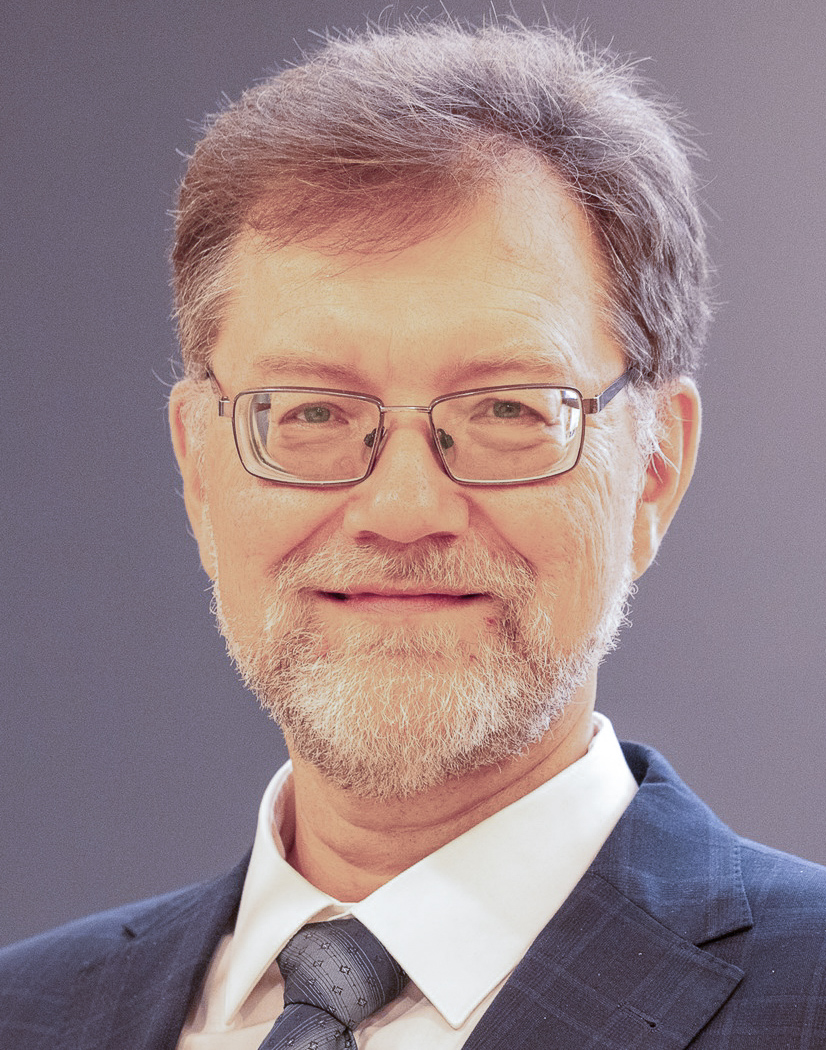
Professor Vladimir Lobaskin is an Associate Professor in the School of Physics at University College Dublin (UCD), where he has served since 2008 and directs both the BSc programme in Theoretical Physics and the MSc programme in Applied Mathematics and Theoretical Physics. He obtained his Specialist Degree in Physics and Teaching from Chelyabinsk State University, a PhD in Physics from Urals State Technical University, and a Doctor of Science (Habilitation) in Physics from Chelyabinsk State University. Prior to joining UCD, he held research and teaching positions in Germany, Switzerland, Sweden, and Russia, including appointments at the Technical University of Munich, the Max Planck Institute for Polymer Research, Lund University, and the University of Fribourg.
His research spans soft matter physics, nanotechnology and nanosafety, collective phenomena, cell motility and tissue mechanics, materials modelling, and machine learning. Professor Lobaskin has coordinated and led numerous European and national research projects, including MembraneNanoPart, SmartNanoTox, NanoCommons, NanoSolveIT, and nanoPass. He serves on several international nanosafety and nanoinformatics committees and has supervised numerous postgraduate students. With 95 publications and an h-index of 31 (Scopus), his work has made significant contributions to the understanding of colloidal systems, bio–nano interactions, and predictive nanoinformatics.
Plenary: Condensed Matter; 07 July; 08:30 - 09:25; JG Hall
What the Cell Sees: Modelling the Bionano Interface
Bionano interactions sit at the heart of some of the most promising technologies of the coming decade, including targeted drug delivery, mRNA vaccines, biosensors, theranostic agents, and engineered interfaces for regenerative medicine. They are, at the same time, the key to understanding the toxicity of nanomaterials. In both roles, what matters is not the pristine nanomaterial but the dynamic corona of proteins and lipids that reshapes its surface on contact with a biological fluid and ultimately determines the fate of the particle and its. This corona governs how the particle is recognised by cell membranes and receptors, directing uptake, intracellular trafficking, and downstream biological response.
In this presentation I will show how computational materials models and nanoinformatics methods allow us to zoom into the bionano interface and identify the principal factors controlling corona formation and the behaviour of nanomaterials in biological media. The multiscale character of the problem demands a combination of physics-based simulation and data-driven models built on machine learning. I will argue that soft matter physics provides the mechanistic backbone that both next-generation nanotechnologies and regulatory science increasingly need.
Prof Ernest van Dyk
Department of Physics, Nelson Mandela University

Professor Ernest van Dyk is a leading physicist and photovoltaics expert at Nelson Mandela University in South Africa. With over three decades of academic and research experience, his work focuses on materials science, solar cell physics, and the advancement of photovoltaic (PV) technologies in South Africa. He holds a BSc in Physics and Applied Mathematics, BSc (Hons) and MSc in Physics, and a PhD in Semiconductor Physics—all from the University of Port Elizabeth.
Prof van Dyk has played a key role in advancing solar energy research and training in South Africa. His commitment to energy access and sustainability is evident through collaborations with industry, government, and international agencies. He has supervised or co-supervised 45 master’s and PhD students, authored or co-authored 71 peer-reviewed journal articles, 95 conference proceedings, and authored or co-authored 299 conference presentations, while also contributing extensively to national and international capacity-building initiatives.
Prof van Dyk is passionate about bridging the gap between cutting-edge research and real-world energy solutions. Through his work, he continues to foster a new generation of scientists and engineers dedicated to sustainable development and energy equity. He is also co-founder and CEO of the university spin-off company PVinsight (Pty) Ltd, an ISO 17025 accredited photovoltaic module testing laboratory and consulting company. He is also registered as a natural scientist (Pr.Sci.Nat.) with the South African Council for National Scientific Professions and as a Certified Physicist (CPhys) with the South African Institute of Physics.
Plenary: Applied Physics; 07 July; 13:40 - 14:35; JG Hall
From Device Physics to Utility-Scale Systems: The Remarkable Reach of Photovoltaics
The global deployment of photovoltaic (PV) technology has accelerated dramatically over the past decade, establishing solar energy as one of the fastest-growing sources of electricity worldwide. South Africa has mirrored this trend, driven by both utility-scale developments and widespread adoption across the commercial, industrial and residential sectors. By early 2026, the country's cumulative installed PV capacity is estimated to exceed 10 GW, highlighting the increasingly important role of PV in ensuring energy security, economic development and the transition to a low-carbon energy future.
Understanding the fundamental physics of solar cells and PV modules remains essential for interpreting the performance of PV systems across all scales. The electronic and optical properties of semiconductor materials determine device efficiency, while module design, environmental exposure and operating conditions influence long-term performance, reliability and degradation. The physical principles that govern charge generation and transport in a solar cell also underpin the analysis of module failures, system losses and the energy yield of large-scale PV power plants.
This presentation traces a personal and scientific journey through the PV value chain, illustrating how knowledge developed at one scale shapes understanding at the next. Beginning with semiconductor crystal growth and materials characterisation of InGaAs and related compounds, the discussion progresses through solar-cell device physics, advanced characterisation techniques, module performance and reliability, and ultimately to the modelling, monitoring and analysis of multi-megawatt PV installations.
By connecting concepts across the scales, the presentation highlights the interdisciplinary nature of PV and demonstrates how a strong foundation in materials science and device physics enables meaningful contributions to the design, operation and optimisation of PV systems. The remarkable reach of PV lies not only in their global deployment, but also in the seamless integration of fundamental science, engineering innovation and societal impact that characterises this rapidly evolving field.
Prof Malik Maaza
UNESCO-UNISA-iThemba LABS NRF Africa Chair in Nanosciences & Nanotechnologies

Prof. M. Maaza is the current incumbent, in South Africa, of the UNESCO UNISA- ITLABSNRF Africa Chair in Nanosciences & Nanotechnologies. He is a joint staff of the University of South Africa and the National Research Foundation of South Africa. His h-index is about 114 and i10=623, with total citations above 42,000. He is a fellow of various Academies, including the European Academy of Arts & Sciences, the African Academy of Science as well as the National Academy of Science of India, the Islamic Academy of Sciences & the Royal Society of Chemistry-London. Prof. M. Maaza has been bestowed several awards & accolades including the Oppenheimer award, the Galileo-Galilei award by the International Commission for Optics (ICO), and the African Union Nkwame Nkrumah award for Excellence in Science & Technology & as well as the J. Vasconcelos award for education by the World Cultural Council-Hong Kong in addition to the recent International Khawarizmi award and the International Union for Pure & Applied Physics (IUPAP) award.
Special Invited Talk; 07 July; 16:10 - 17:10; Great Hall Lecture Venue 1
Room Temperature Quantum Mechanics Peculiarities in Nanoscale Systems & their potential technological applications towards SDGs
The intrinsic surface and interface properties of nanoscale systems are correlated to their surface to volume ratio, surface atomic coordination, electron and phonon confinement, and other factors. Such shape & size dependent features are established to give a birth to peculiar quantum mechanics responses. Among such, one could mention; (i) the Fermi Total reflection of cold neutron wave-packet & their trapping within the picosecond time regime, (ii) the Anderson Infrared light localization in semidisordered Carbon Nanotubes & lasing in semi-disordered nanomaterials, (iii) the size dependent bandgap tunability in Mott transition Semiconductor- Metallic phase transition systems, (iv) the relativistic Dirac “S” orbitals contraction & room temperature solid mercury, and last but not least (v) the enhanced thermal conductivity of nanofluids conceptualized by the Father of electromagnetism, James Clerk Maxwell.
This contribution reports on the theoretical & experimental observations of the above-mentioned unusual quantum mechanics governed peculiar phenomena. Likewise, their potential technological applications will be highlighted.
Prof Lynndle Square
Centre for Space Research, North-West University

Prof Lynndle Square is an Associate Professor in the Centre for Space Research at North-West University (NWU), South Africa. She holds a PhD in Computational Physics from the University of the Western Cape and conducts research in Computational Materials Physics, Space Materials, Polymer Nanocomposites, and Physics Education Innovation. Her work focuses on the modelling and development of advanced materials for space applications, including radiation-shielding materials for use in the harsh environments of low Earth orbit. She serves as Principal Investigator for Materials for Space Applications at NWU, Work Package Leader for Functional Materials for Space Applications within the National Institute for Theoretical and Computational Sciences (NITheCS), and Subject Group Leader for Physics at NWU.
Prof Square has established a strong record in both research and teaching, with more than ten peer-reviewed and conference publications, supervision of postgraduate students across honours, master's, and doctoral levels, and leadership of several research initiatives. In recognition of her contributions, she has received numerous awards, including the Innovation in Teaching and Learning Award (2024), the NRF Thuthuka Award (2022), the Research Merit Award (2022), and the Teaching Excellence Award (2020). Her work reflects a commitment to advancing both materials research and innovative approaches to physics education.
Plenary: WiPiSA; 08 July; 08:30 - 09:25; JG Hall
Physics Without Boundaries: Reimagining Physics Through Research, Education and Leadership in the Fourth Industrial Revolution
What does a physicist look like in the Fourth Industrial Revolution? While advances in computational modelling, artificial intelligence, advanced materials, sensing technologies, and data-driven discovery are transforming the discipline, the future of physics will be determined not only by technological innovation but also by our ability to connect research, education, industry, and society while building an inclusive and sustainable community of physicists.
This plenary explores how physics can transcend traditional disciplinary boundaries through examples drawn from computational materials research for Low Earth Orbit, physics education innovation, and industry-linked student projects investigating cricket ball dynamics and acoustic monitoring systems. Together, these illustrate how authentic, interdisciplinary experiences prepare students for the evolving landscape of the Fourth Industrial Revolution while demonstrating the versatility and societal relevance of physics.
Beyond research, the talk reflects on the importance of intentionally creating spaces where people can encounter physics, develop confidence and build professional networks. Through participation in Women in Physics in South Africa (WiPiSA) networking initiatives, contribution to the WiPiSA 20th Anniversary Roundtable, public engagement through radio discussions, and the development of the Meet a Physicist High Tea for female high school learners, I explore how conversations, mentorship, visibility and collaboration can broaden participation in physics and strengthen the
discipline for future generations.
Rather than viewing research, teaching, outreach and leadership as separate responsibilities, I argue that they are interconnected components of a single ecosystem. Building a sustainable and inclusive future for physics requires not only scientific excellence, but also intentional mentorship, collaboration and the creation of opportunities for others to contribute. Ultimately, the physicist of the future will be defined not only by the knowledge they generate, but by the communities they cultivate and the pathways they create for those who follow.
Prof Natalia Litchinitser
Fitzpatrick Institute of Photonics, Duke University

Natalia M. Litchinitser is the Michael J. Fitzpatrick Distinguished Professor of Electrical and Computer Engineering, Professor of Physics, and Director of the Photonics Materials Program at the Fitzpatrick Institute of Photonics, Duke University. She holds a Ph.D. in Electrical Engineering from the Illinois Institute of Technology and is an internationally recognized leader in photonics, metamaterials, and optical physics. She began her work on metamaterials as a research scientist at the University of Michigan and joined the University at Buffalo faculty in 2008, where she became one of the leading experts in optical metamaterials.
Litchinitser's research spans structured light, metamaterials and metasurfaces, nonlinear optics, topological photonics, advanced imaging technologies, and machine-learning-enabled photonic device design. Her current work explores novel approaches to controlling light, including topological photonic devices, orbital angular momentum microlasers, supersymmetry-inspired optics, and imaging systems for neuroimaging and underwater applications. She is a Fellow of IEEE, Optica, APS, and SPIE.
Plenary: Photonics; 08 July; 13:40 - 14:35; JG Hall
Structured Light and Darkness in Nanophotonics
The rapid development of optical technologies, including optical manipulation and trapping, data processing, sensing and metrology, advanced imaging and microscopy, as well as classical and quantum communications, necessitates the exploration of new degrees of freedom for structuring light in space and time beyond conventional control of amplitude, phase, and polarization. Topological particle-like objects in structured optical fields have emerged as promising candidates for such degrees of freedom. In particular, these optical topologies offer new capabilities for communication, imaging, and sensing through atmospheric turbulence, where refractive index fluctuations distort phase, polarization, and field structure. In this talk, we discuss structured light and darkness, including optical beams with an orbital angular momentum, knotted singularities, and optical skyrmions, and demonstrate their generation, propagation, and interactions with matter in linear and nonlinear regimes. Using metasurfaces and metamaterials, we achieve subwavelength control of optical fields and topology imprinting at fundamental and harmonic frequencies, and introduce spatiotemporal approaches for structuring light jointly in space and time.
Professor Paul Garrett
Professor of Physics, University of Guelph
Extraordinary Professor, University of the Western Cape

Prof Paul E. Garrett is a Professor of Physics at the University of Guelph and an Extraordinary Professor at the University of the Western Cape. He earned a B.Sc.Eng. in Engineering Physics from Queen's University, followed by M.Sc. and Ph.D. degrees from McMaster University. Over a career spanning academia, national laboratories, and international research institutions, he has held positions at the University of Fribourg, the University of Kentucky, Lawrence Livermore National Laboratory, and North Carolina State University. He has served as Professor at the University of Guelph since 2010 and chaired its Physics Department from 2015 to 2021.
An internationally recognized experimental nuclear physicist, Garrett’s research focuses on nuclear structure, collective excitations, shape coexistence, and high-precision nuclear spectroscopy. His work has challenged long-standing models of nuclear collectivity and advanced understanding of vibrational and rotational behaviour in atomic nuclei. He has authored more than 200 refereed journal publications, supervised dozens of undergraduate and postgraduate researchers, and secured over Cdn$5.9 million in research funding as principal investigator. His contributions have been recognized with numerous honours, including the 2023 Canadian Association of Physicists–TRIUMF Vogt Medal for outstanding contributions to subatomic physics. He has also played leading roles in the development of major nuclear physics instrumentation, including the DESCANT neutron detector array and the GRIFFIN spectrometer, while providing extensive service to the international nuclear physics community through advisory committees, funding review panels, and scientific leadership roles.
Plenary: Nuclear Physics; 09 July; 08:30 - 09:25; JG Hall
Advances in Nuclear Structure Physics
The past two decades have witnessed a resurgence in nuclear structure physics due to the advent of radioactive beam facilities around the world. In parallel, there have been tremendous strides in nuclear structure theory that are able to provide highly accurate predictions from first-principle approaches. New phenomena are being discovered and old paradigms challenged resulting in a much deeper understanding of the interplay of single-particle and collective excitations. In this presentation, I will give an overview of some of the new experimental facilities and their capabilities and examples of structural phenomena that have been revealed over the past two decades. I will also give examples of where nuclear structure impacts tests of fundamental symmetries and searches for physics beyond the Standard Model.
Presentation materials
Prof Jens Gundlach
Department of Physics, University of Washington
Breakthrough Prize Winner in Fundamental Physics, 2021

Jens Gundlach is a Professor of Physics at the University of Washington, internationally recognized for his pioneering contributions spanning fundamental gravity and biophysics. After earning his Ph.D. in experimental nuclear physics from the University of Washington in 1990, he became an integral part of the University’s renowned gravity group, where he developed ultra-precise torsion balance experiments to test the equivalence principle and Newton’s inverse-square law at short length scales. Notably, his 2000 measurement of the gravitational constant (G) remains the most precise value to date. His work on gravity led him to join the LISA and LIGO collaborations, and earned him a share of the prestigious 2021 Breakthrough Prize in Fundamental Physics.
Prof. Gundlach also expanded his research into biophysics, pioneering the world's first implementation of nanopore DNA sequencing using an engineered MspA protein pore—a technology that has been adopted by industry. Today, his lab develops single-molecule tools capable of studying enzyme motion along DNA with high spatio-temporal resolution, enabling enzymologists worldwide to analyze genomic enzymes and advance future drug discovery.
SAIP2026 LOC Invited Plenary; 09 July; 13:40 - 14:35; JG Hall
Nanopore Single-Molecule Biophysics
My group has been at the nexus of developing nanopore sequencing of DNA and establishing nanopores as a new tool for single-molecule biophysics. Much of our work is based on the engineered protein nanopores through which we pull DNA. Here, I will show the stunning capabilities of using this nanopore technology to observe biology’s molecular machines in real-time as these enzymes move along DNA or RNA. We easily achieve ten times better position and time resolution than optical tweezers, while simultaneously measuring the exact nucleotide sequence within the enzymes. I will show hereto unseen detail of the motion of helicases, DNA and RNA polymerases, reverse transcriptases, etc. Besides establishing decisive kinetic enzyme models, our method reveals many surprisingly properties of these enzymes.
Throughout the talk, I will highlight the power of physicists’ approaches to interdisciplinary research and technology.
Dr Charles Takalana
Deputy Director, IAU Office of Astronomy for Development
.JPG?1782076608163)
Charles Mpho Takalana completed his undergraduate studies at the University of Johannesburg before pursuing postgraduate research in physics at the University of the Witwatersrand (Wits), where he was awarded a PhD in December 2020, specialising in Astronomy and Astrophysics. His doctoral research focused on data analysis techniques for differential observation of the low-frequency radio cosmological background, probing the physics of the Epoch of Reionization, the Dark Ages, and the Epoch of Recombination. He began his career as a Consultant Analyst at CorpActive before joining the South African Radio Astronomy Observatory (SARAO) at the Department of Science and Innovation (DSI) as an Astronomy Policy Researcher, supporting the implementation of the South African Multi-Wavelength Astronomy Strategy and contributing to building a vibrant astronomy community with the capacity to drive national and world-class astronomy projects.
Until 2021, he served as the founding Head of Secretariat of the African Astronomical Society (AfAS) and was also Vice Chair of the National Organising Committee for the 2024 IAU General Assembly in Cape Town, the first time the event was hosted on African soil. He is currently the Deputy Director of the International Astronomical Union Office of Astronomy for Development, a joint project of the International Astronomical Union and the National Research Foundation, supported by the Department of Science, Technology, and Innovation (DSTI). He also serves as an Extraordinary Lecturer at Stellenbosch University and continues to contribute to the development of continental astronomy as an Advisor to AfAS, while remaining involved in outreach and passionate about inspiring and sharing astronomy with young people. In 2025, he was recognised as one of South Africa’s 100 Shining Stars by Inside Education for his contributions to science and technology.
Dr Joyful Mdhluli
IAU Office of Astronomy for Development

Dr. Joyful Mdhluli is a Postdoctoral Researcher at the International Astronomical Union’s Office of Astronomy for Development (OAD), where she coordinates flagship projects that leverage astronomy to address global development challenges. She earned her PhD in Particle Physics from the University of the Witwatersrand, focusing on data from the ALICE experiment at CERN’s Large Hadron Collider. In recognition of her doctoral work, Dr. Mdhluli was named one of the laureates for the 2025 Breakthrough Prize winners in Fundamental Physics, as part of the international ALICE Collaboration. Her research contributed to advancing our understanding of the early universe through the study of quark-gluon plasma.
She has broad experience in science communication, education, and policy engagement. Dr. Mdhluli is a member of the Organization for Women in Science for the Developing World (OWSD) and currently serves as the Executive Secretary of Women in Physics in South Africa (WiPiSA), promoting gender equity in science. She is the Director and member of the Executive Committee of the African Astronomical Society (AfAS). Her accolades include the ‘Best Pitch Award’ from the Black Women in Science (BWIS) Fellowship and participation in the 70th Lindau Nobel Laureate Meeting. She also contributes editorially to the African Physics Newsletter and the Communicating Astronomy with the Public Journal.
Plenary: Physics Education and Development; 10 July; 08:30 - 09:25; JG Hall
Astronomy for a Better World: Connecting Knowledge, Society, and Sustainable Development
Traditional development approaches are increasingly struggling to respond to the complexity and urgency of contemporary global challenges, including widening inequality, climate instability, and the demand for inclusive and sustainable growth. Many existing development frameworks remain siloed, with limited integration of science, technology, and innovation, constraining their overall impact.
At the same time, scientific disciplines such as astronomy are often perceived as primarily academic, focused on advancing fundamental knowledge with limited direct societal application. This perception obscures the significant role that science has played in driving technological innovation and human capital development. In particular, technologies originating from astronomical research have contributed to advancements in digital imaging, medical diagnostics, satellite communications, and large-scale data processing, demonstrating the far-reaching impact of science on modern society.
The International Astronomical Union Office of Astronomy for Development was established in 2011 to address this gap by leveraging astronomy, within the broader context of science, as a tool for sustainable development. Operating across more than 100 countries, the OAD has supported hundreds of projects that illustrate how science can contribute to education, scientific capacity building, technological innovation, cultural preservation, environmental awareness, and social cohesion.
This talk will present an overview of the OAD’s strategic framework, flagship ecosystem, and global network model, highlighting its alignment with the United Nations Sustainable Development Goals. Through competitive Calls for Proposals and strategic partnerships, the OAD enables locally driven initiatives that apply science, particularly astronomy, to community-defined challenges, including STEM education, mental wellbeing, Indigenous knowledge systems, astrotourism, and science diplomacy.
Beyond programme implementation, the OAD’s growing body of global practice has created important opportunities for research. Evidence generated through projects, partnerships, and regional networks is increasingly informing questions around impact evaluation, science engagement, capacity development, innovation ecosystems, and the role of scientific knowledge in society. This has contributed to the emergence of astronomy for development - and more broadly science for development - as a developing interdisciplinary research field that connects the physical sciences with development studies, policy, education, and social science methodologies.
By positioning science - and astronomy as a powerful exemplar - within the broader development landscape, this work demonstrates its potential as a cross-cutting, interdisciplinary tool capable of contributing meaningfully to sustainable and inclusive development.
Prof Eamon Scullion
Northumbria University

Professor Eamon Scullion is a Professor of Mathematics at Northumbria University whose research spans solar physics, space science, and space technology development. He holds a PhD in Applied Mathematics from the University of Sheffield and Armagh Observatory, an MSc in Physics and Astronomy from the University of Glasgow, and a BSc in Physics and Applied Mathematics from Queen's University Belfast. His research has focused primarily on solar physics, where he is best known for the discovery of magnetic tornadoes in the lower solar atmosphere, published in the journal Nature in 2012. He has held research and academic positions at the University of Oslo, Trinity College Dublin, and Northumbria University, and is a Fellow of the Royal Astronomical Society, the Institute of Mathematics and its Applications, and the Higher Education Academy.
Alongside his scientific research, Scullion has led major space technology initiatives, including the UK Space Agency-funded ALIGN mission, which developed novel laser communications technology for CubeSats and secured £6 million in funding as Principal Investigator. This work contributed to the establishment of Northumbria’s first Space Laboratory in 2022 and helped pave the way for the £50 million North-East Space Skills and Technology (NESST) Centre in partnership with Lockheed Martin UK and the UK Space Agency. He has supervised multiple doctoral students and postdoctoral researchers, served as Departmental Director for Equality, Diversity and Inclusion at Northumbria University, led the department’s successful Athena Swan Bronze Award application, and has published 50 peer-reviewed papers with an H-index of 27.
Plenary: Space Science; 10 July; 13:30 - 14:25; JG Hall
The Sun in Focus: From Early Telescopes to High-Resolution Physics
From its earliest presence in southern African cosmology, where the Sun was revered in San and Nguni traditions as a life-giving and regulating force, to its formal study within the Royal Astronomical Society era of systematic observation, our understanding of the Sun has evolved through a remarkable fusion of culture, geography, and technology. This plenary traces the evolution of solar observation from early sunspot sketches to modern diffraction-limited imaging with the Swedish 1-m Solar Telescope and more recently with the Daniel K Inouye 4-m Solar Telescope. These advances have transformed the Sun from a distant luminous disk into a dynamic, multi-layered plasma system, where fine-scale magnetic structuring and energy transport processes are now resolved across multiple spectral domains. The talk highlights how increasing spatial, temporal, and spectral resolution, combined with global collaborations involving institutions such as the South African Astronomical Observatory, has deepened our understanding of the coupled photosphere–chromosphere–corona system and its role in space weather. By bridging heritage, international collaboration, and cutting-edge technology, we move closer to unlocking the fundamental plasma physics governing our nearest star.